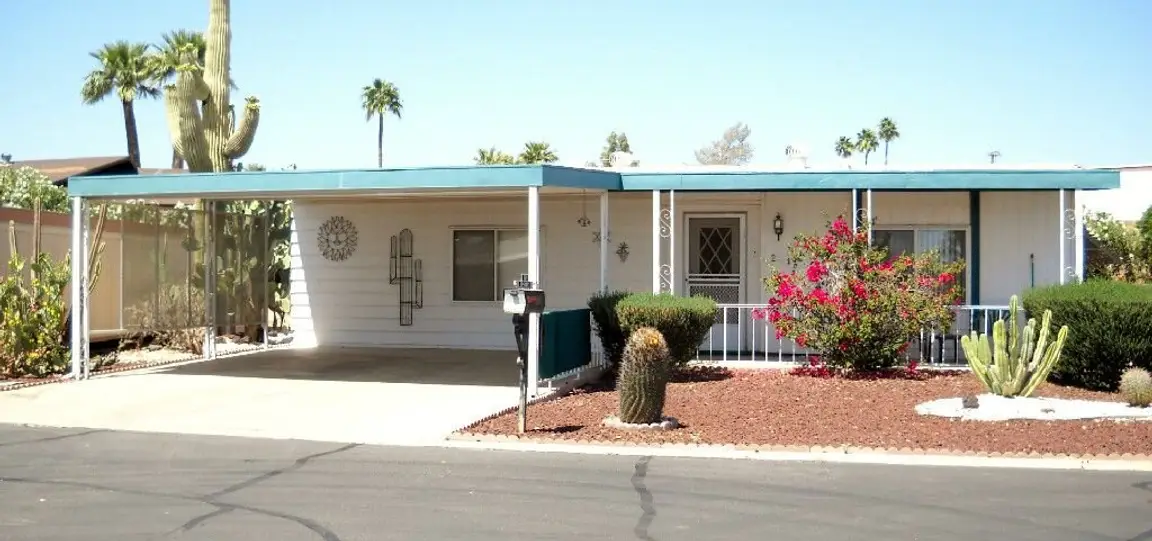

Yes. You can sell a mobile home with park rule violations, needed repairs or notices from the city. A cash buyer can buy it as it sits and take care of the problems after closing. You don’t need to fix anything first, and you don’t need to clear the notices before you call.
What kinds of violations hold up a sale?
In a park, most problems come from the park’s own rules, not the city. Common ones include:
- Faded or damaged skirting
- Peeling paint or worn siding
- Yards, carports or sheds that don’t meet park standards
- Junk or debris around the home
- Roof leaks, broken windows or steps that aren’t safe
Parks send written notices for these. If you got one, it usually gives you a deadline to fix the problem.
Why do violations make selling harder?
Because the park has a say in who moves in. When a home is sold, the park can require the buyer to meet current rules on condition and appearance. If the home is run down, the park can require repairs, or in some cases removal of the home, as part of approving the sale.
That scares off most retail buyers. They don’t want to buy a home and then find out it needs thousands in work before the park approves them. That’s where the sale falls apart.
How does a cash sale handle the repairs?
We buy the home with the problems, and we deal with the park ourselves. We look at what the park requires, figure out what the work costs, and build that into our offer. You don’t pay for repairs, hire anyone or wait for work to get finished.
This matters most when there’s a deadline. A notice with a cure date and a home that needs real work can feel impossible. Selling as-is takes that pressure off.
It also helps when the problems are bigger than a weekend project. Subfloor damage, an old roof or a failing AC unit can run into real money. Most sellers don’t want to take that on, and they shouldn’t have to just to move on from a home.
Should you fix anything before selling?
Usually not. Big repairs rarely pay for themselves in a mobile home sale. Spending money on a roof or new skirting before selling often means putting cash into a home you’re about to leave.
There’s one exception. If a notice involves a safety problem, like broken steps or an exposed electrical issue, make it safe. You don’t want anyone hurt while you’re working on the sale. A quick, low-cost fix for safety is different from a full repair, and it’s worth doing.
What if the park says the home has to be moved?
That’s the toughest situation, but it still has options. A park can require removal of a home that’s rundown or doesn’t meet its rules, usually within a set time after a sale. Older homes, built on or before June 15, 1976, can also be required to leave when they’re sold.
Moving a mobile home is expensive, so most sellers can’t do it themselves. Call us anyway. Depending on the home and the park, a cash buyer may still be able to buy it, work out repairs the park will accept, or handle the move.
Does selling as-is lower your price?
Yes, the offer reflects what the home needs. But it also means you skip paying for repairs, waiting on the work and risking a deal that falls apart at park approval. For a lot of sellers, a clean sale on a set date is worth more than a higher number that never closes.
What should you tell a buyer?
Everything you know. Share the park notices, the repairs you’re aware of and any deadlines. If you have photos of the problem areas, send those too. A good buyer prices it in. Surprises after closing help nobody, and being upfront keeps the sale on track.
Have a home with violations or repairs you can’t take on? Call or text us at (602) 641-3237. We buy as-is.