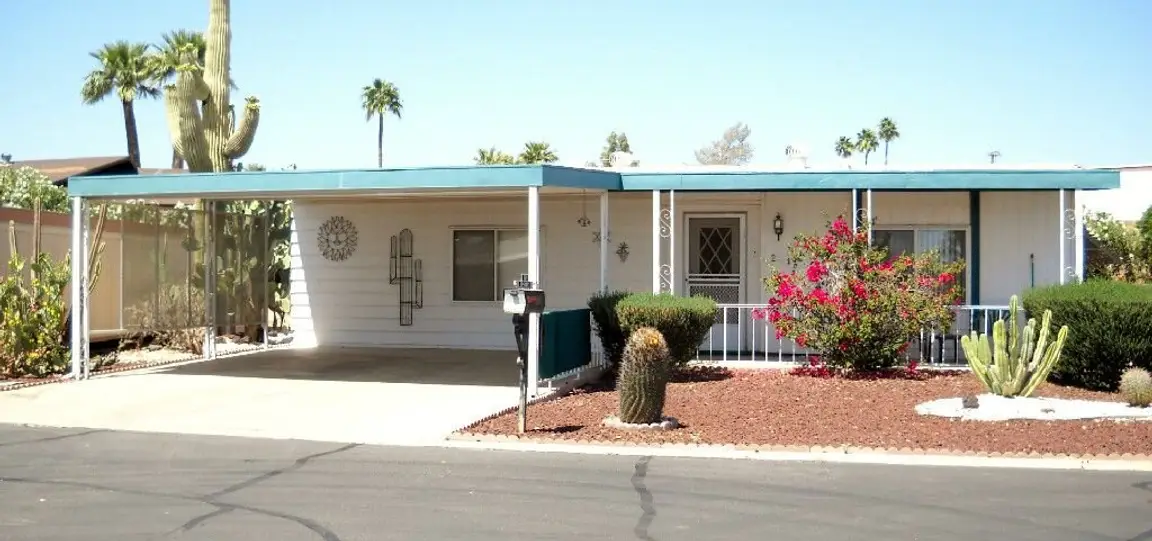

If you own your mobile home and rent the lot, an eviction notice does not mean you have to lose the home or walk away with nothing. In Arizona, you still own the home, and in most cases you still have the right to sell it, even while an eviction is underway. The catch is time. Once the process starts, it moves in weeks, not months.
I buy mobile homes in Arizona parks, and I talk with residents in this spot every month. This post covers how people usually end up here, how the eviction process and timeline work under Arizona law, and what your rights are if you want to sell before it’s too late.
I’m not an attorney and this isn’t legal advice. It’s general information about how the process works in Arizona. If you’ve been served court papers, talk to a lawyer or a free legal aid office right away.
How people end up here
Most of the residents I talk with never expected to see an eviction notice. It usually starts with one hard month that turns into three. These are the four situations I see most often.
A medical problem. A hospital stay, a surgery, or a long illness can stop a paycheck and stack up bills at the same time. Lot rent is often the first payment that slips, because it feels like it can wait. In a mobile home park, it can’t wait long.
A lost job or cut hours. Lot rent in the Phoenix Metro area (i.e. Phoenix, Tempe, Chandler, Mesa, Glendale, etc.) keeps climbing, and many residents are on a tight or fixed budgets. When income drops, even one missed month puts you behind on rent plus late fees, and catching up gets harder each month.
A death in the family. When a parent or spouse who owned the home passes away, the family often inherits a home and a lot rent bill at the same time. Under Arizona law, an heir can stay in the home only if they qualify as a tenant under the park’s normal rules, including age rules in a 55+ park. Otherwise the heir can sell the home. Either way, the past-due rent still has to be paid.
A disagreement with park management. Not every eviction is about money. Parks can end a tenancy for breaking park rules or the rental agreement, such as yard upkeep, home repairs, pets, parking, or guests. These notices often follow months of back-and-forth with the manager, and residents are sometimes surprised to learn they can lead to an eviction case.
Whatever the reason, the steps that follow are set by Arizona law, and the clock starts with the first written notice.
The Arizona eviction process and timeline
Mobile home park evictions in Arizona follow the Mobile Home Parks Residential Landlord and Tenant Act, not the regular apartment rules. The park must give you written notice that states the specific reason. For unpaid rent, the whole process from the first notice to being locked out can take as little as three to four weeks.
How much notice you get depends on the reason (A.R.S. 33-1476):
| Reason | Notice and time to fix it |
| Unpaid rent | 7 days to pay after written notice |
| Breaking the rental agreement or park rules | 14 days to fix it; tenancy ends no sooner than 30 days after the notice |
| Health and safety problem with the home or space | 10 days to fix it; tenancy ends no sooner than 20 days after the notice |
| Repeated problems (several documented incidents in 12 months) | A written warning, then a 30-day final notice |
| Serious criminal acts in the park | Immediate termination; the park can file the same day |
| Park closing or changing use | 180 days’ notice, plus help with moving costs |
What happens after the notice runs out:
- The park files an eviction case in justice court. A constable or sheriff serves you with the court papers, either in person or by posting them on your door and mailing a copy.
- You get a court date, usually within about a week. If you have a defense, this is your chance to raise it. If you don’t show up, the park will almost certainly win.
- For unpaid rent, you can still stop it before judgment. Arizona lets you reinstate your tenancy by paying the past-due rent, the park’s attorney fees, and court costs before the judge rules.
- The judge enters a judgment. For most evictions, the writ of restitution (the order to remove you) can’t issue until 5 calendar days after the judgment (A.R.S. 12-1178).
- A constable carries out the writ. You and your belongings are removed, the home is locked, and it is treated as abandoned. You still own it, and the title stays in your name, but you can’t move it off the space until the park signs a clearance showing everything owed has been paid (A.R.S. 33-1481, A.R.S. 33-1451).
- The park moves toward an auction. Within 10 days the park must try to find and notify the owner and any lender on the title (A.R.S. 33-1478). After that, the park can sell the home at a public landlord lien auction to cover what it’s owed. Counting from the first missed rent check, the auction usually happens about 60 to 90 days later.
At auction, homes often sell for little more than the back rent and fees. Anything left over is supposed to go back to you, but most people get far less from an auction than they would from selling the home themselves.
Your right to sell your mobile home
The park owns the land. YOU OWN THE HOME. Arizona law protects your right to sell it at a price you choose, and that right doesn’t end just because you’ve received an eviction notice (A.R.S. 33-1452) or have already been evicted.
What the park can’t do:
- Stop you from selling, or set your price.
- Charge a commission or fee on the sale, unless you hired the park in writing to sell it for you.
- Make you use a certain broker or sales company.
- Ban a “For Sale” sign. You can put one up to 12 by 18 inches in a window.
- Make the buyer move the home out just because of its age, if it was built after June 15, 1976.
What the park can do:
- Approve the buyer as a new tenant using its normal rules. Approval can’t be unreasonably withheld, and if they say no, you or the buyer can ask for the reasons in writing. The park has 10 days to give them.
- Require the home to be moved within 60 days after the sale if it’s run down or doesn’t meet the park’s current rules.
- Collect what you owe. The past-due rent and fees get paid when the home sells, usually out of the sale money at closing. The home can’t leave the space until the park signs off that everything is paid.
Selling during an eviction. You can sell at any point while you still own the home, even after a judgment. The earlier you start, the more choices you have. Before the court date, a sale can pay off the back rent and end the case. After the lockout, you still own the home, but you’ll need the park’s cooperation to get inside, show it, and close, and the auction clock is running. In my experience, one of the most common reasons a scheduled auction gets cancelled is that the owner sold the home and paid the park first.
If you inherited the home, the same right applies. An heir can sell the home under the deceased owner’s rental agreement, and the past-due rent is paid out of the sale (A.R.S. 33-1419).
Facing eviction? Talk to us before the auction does
If you’ve received a notice from your park, or you think one is coming, call or text me now. The earlier we talk, the more of your home’s value you keep.
Penrod Mobile Homes buys mobile homes in parks across the Phoenix Metro areas, as-is. That means:
- No repairs, no cleaning. Leave what you don’t want.
- A fast close, often in a matter of days, so the sale can happen before the court date or the auction.
- We work with your park manager on the buyer approval and on clearing what’s owed at closing, so you don’t have to.
- We work with you to help you get your personal household belongings back if you want them.
- A straight answer. If your home isn’t a fit for us, I’ll tell you so you can look at other options right away.
Call or text Mike at (602) 641-3237, or fill out the short form on our mobile home eviction page and we’ll get back to you within 24 hours.
Sources
- A.R.S. 33-1476: Termination of rental agreement
- A.R.S. 33-1452: Rules and regulations (right to sell)
- A.R.S. 33-1419: Inheritance of mobile home
- A.R.S. 33-1451: Clearance for removal
- A.R.S. 33-1478: Notice to owner and lienholder
- A.R.S. 33-1481: Writ of restitution and abandoned homes
- A.R.S. 12-1178: Judgment and writ of restitution
- AZCourtHelp: Mobile home evictions